The commercial reality of genre
8 April, 2026
In publishing, genre is the ultimate shortcut to your reader.
Readers aren't randomly browsing for their next favourite novel. They go straight to what they already love.
Romance readers want more romance. Crime readers want more crime ...
Retailers - and more importantly these days, algorithms - rely on genre to decide where new releases will be "shelved" - similar books they sit beside.
It’s powerful.
Every new author wants to sit beside a blockbuster, million copies sold author, right?
From a publisher’s point of view, it can be the difference between success and failure.
Clear genre definition is important.
The big genre sellers
In 2026, the biggest fiction sellers continue to be the familiar ones. Romance, fantasy and thrillers are dominating, accounting for more than half of Kindle sales.
Romance alone generates around $1.4 billion in sales a year.
These genres command loyal, repeat audiences. Readers know exactly where to find their books and what to expect when they buy them.
So Denise, let's have it, what's your genre?
It's not as if I didn't know that question was coming!
I'd done my research.
I knew it would be one of the first questions my publisher asked.
And I went into the meeting with a scripted, well rehearsed answer - which I might add, was delivered with a degree of swagger.
It's political noir.
"Hmmmm", came the response. "It's a thriller then, right?" 😉😜
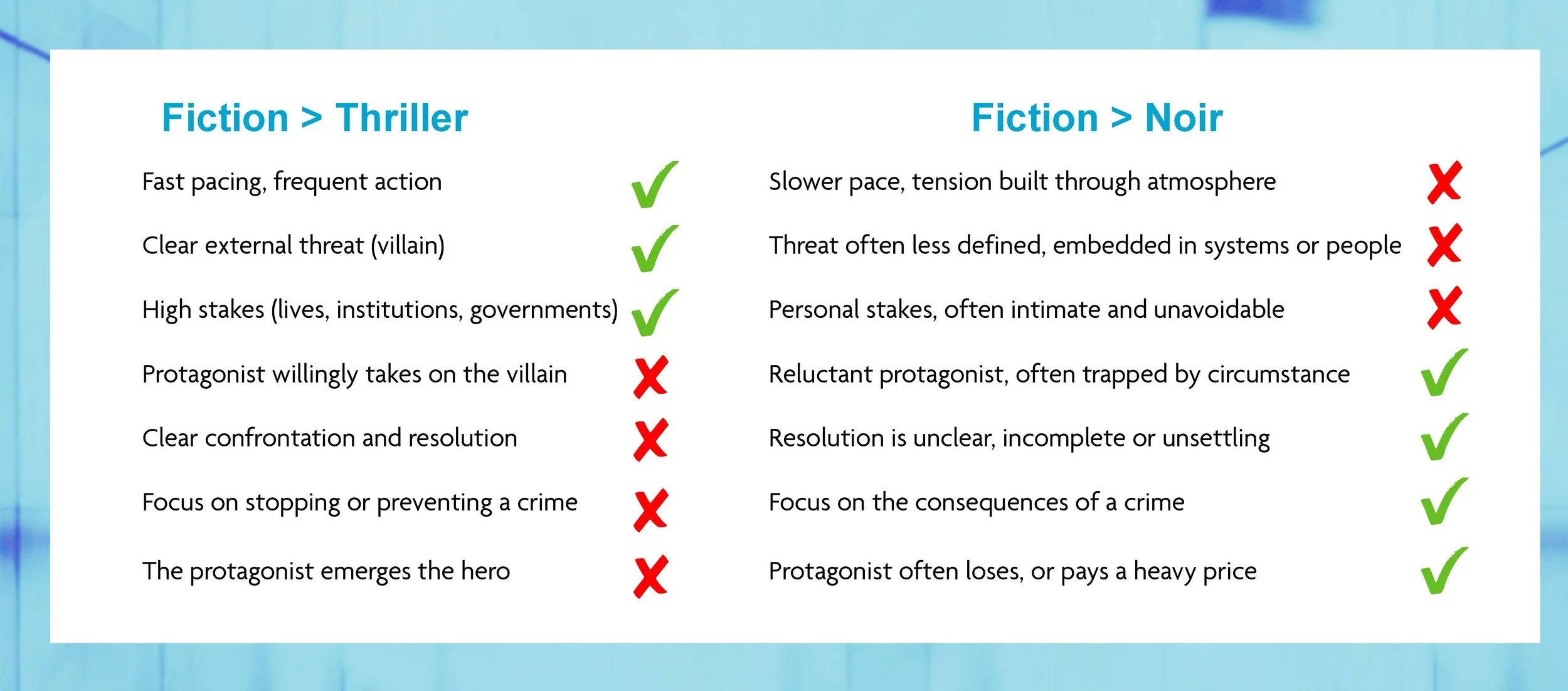
Thriller vs Noir?
The reality is, Unspoken sits between two genres.
Is Unspoken a thriller?
Absolutely.
It has the pace, stakes and structure expected from that category - forward movement, tension and payoff.
But it also carries strong noir elements - corruption, moral grey areas, a sense of systems working against individuals.
For those who like a good compare-and-contrast, here’s a simple breakdown of the differences between the two genres.